
Problem Statement:
Namibia is facing a severe mental health crisis, with males accounting for over 80% of suicides between 2020-2023. The World Health Organization reported Namibia continues to have one of the highest incidents of suicide in Africa and currently ranks 11th globally and 4th in Africa.
In the capital city’s poorest communities, boys grow up in overcrowded areas, where crime, substance abuse, violence and harmful notions of masculinity are common, leaving them at risk of dropping out of school, falling into addiction, or being drawn into the wrong crowds.
Target Group:
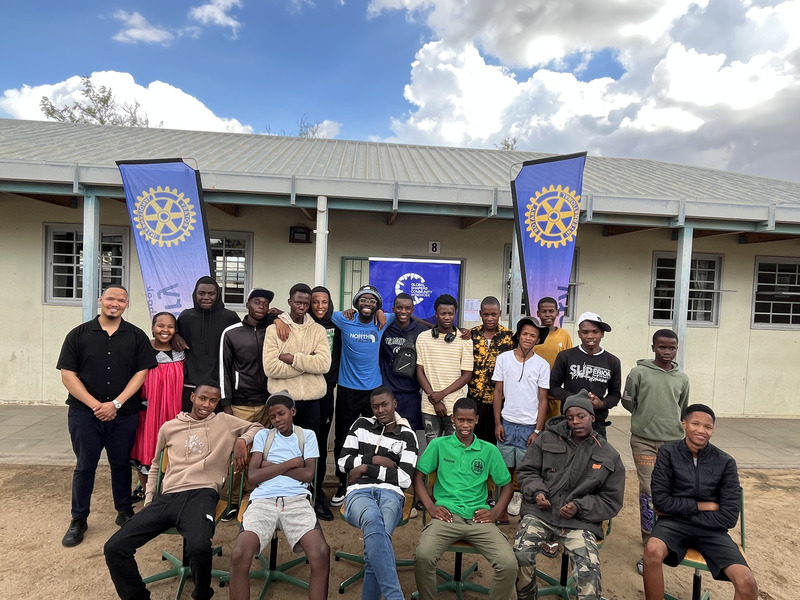
The pilot cohort in 2025 comprised 20 boys between the ages of 16-21. The participants were selected from two remedial high schools. Generally, the participants that formed part of the cohort were those that were labeled as ‘troublesome’ at school i.e. at risk of suspension, showcasing behavioral problems etc. The 2026 cohort will comprise 60 boys from the two schools.
Proposed Solution:
The Better Boys, Better Men project centers on personal development and improving mental health. It directly addresses the critical challenges facing the most vulnerable boys by focusing on fostering personal identity, positive masculinity, emotional intelligence, as well as sexual and reproductive health rights. This is done through bi-weekly facilitated sessions and mentorship. The programme’s focus is to learn, unlearn and relearn what it is to be a ‘man’, while challenging harmful stereotypes and cultivating positive traits and values of manhood.
Hub activities:
The programme is delivered in bi-weekly expert-facilitated sessions and mentorship over five 5 months. The hub provides meals, transport and materials to remove participation barriers. Additionally, the hub and facilitators will partner with a registered mental health experts to develop the Better Boys, Better Men manual that will be used as a training-of-trainer guide to scale the project beyond borders. This will ensure that the manual is valid and approved by a relevant authority.
Short- and long-term goals:
In September-November 2025, 20 boys participated in the pilot. In 2026, the hub intends to have an intake of 60 boys, including those from the pilot for further support. The long-term goal is to train 180 boys over 3 years (60 per year) and scale the programme to three regions and six schools across the country.
Available metrics:
Boys in the pilot which took place from September-November 2025 were given the opportunity to share their experiences, frustrations and hopes openly. Their feedback shaped the 2026 cohort of the programme in concrete ways. They asked for two consistent facilitators they could trust, rather than substitutes who felt unfamiliar. They requested balanced meals (breakfast and lunch) which will make learning easier as many came from less-privileged households. Additionally, the hub provided transport fares enabling them to attend the sessions as opposed to walking long distances.They requested tangible resource materials they could take home such as the Better Boys, Better Men manual being developed.
Futhermore, many voiced the need for professional mental health support, revealing the depth of unaddressed trauma in their lives. A survey was conducted with the boys at the end of the pilot to test their understanding of the four topics before and after the intervention which showed that they grasped the concepts and provided positive feedback on the programme. Finally, the hub gathered qualitative feedback from the Parents/Guardians, Principals and Teachers who had reported improved behaviour.
Collaborators:
The Global Shapers Windhoek Hub leads the project with the Auas Rotary Club as the main sponsor of the pilot in 2025. Jakob Marengo Secondary School and Khomastura Secondary School are our pilot school partners. We work closely with the Principals and Life Skills Teachers at the respective schools to nominate boys. Mathews Kambuze is the facilitator and main mentor of the programme.